By Melissa Dittmann Tracey
Melissa Dittmann Tracey is a contributing editor for REALTOR® Magazine and editor of the Styled, Staged & Sold blog.
A new NAR report reveals which projects homeowners may want to prioritize if they plan to sell within the next year or two.

The home remodeling boom continues, as homeowners leverage their equity to take on a range of house projects, large and small. But are they choosing the best projects to help boost their home’s resale value?
A fancy kitchen upgrade or bathroom renovation may have a significant impact on potential buyers. But for projects that recoup most or all of their cost, owners should think smaller, according to the newly released 2025 Remodeling Impact Report, conducted by the National Association of REALTORS® and the National Association of the Remodeling Industry. Swapping out the front door for steel, for example, is likely to get the most bang for the buck.
Prioritizing Home Remodeling Projects
Being able to help sellers prioritize home improvements and maximize their net on the sale is a key value real estate agents offer. For a range of home improvement projects, the Remodeling Impact Report compares estimated cost (estimates are from a NARI member survey) with real estate professionals’ estimates of the likely dollar value at resale.
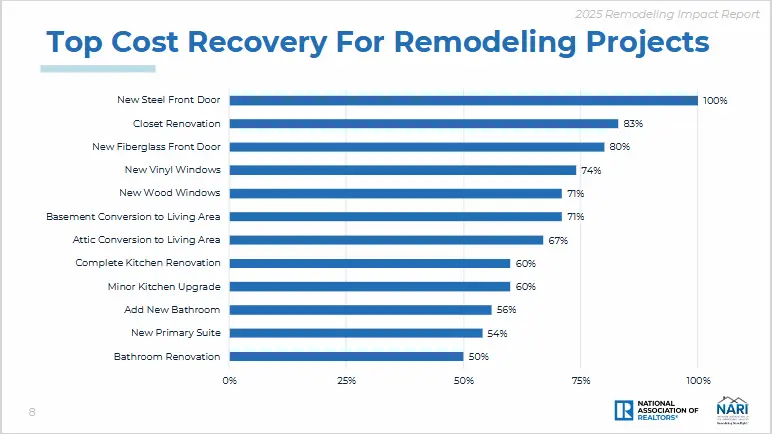
The report revealed the following home remodeling projects may offer the highest returns, based on their estimated cost recovery at resale:
- New steel front door: 100% (estimated return based on upfront cost)
- Closet renovation: 83%
- New fiberglass front door: 80%
- New vinyl windows: 74%
- New wood windows: 71%
- Basement conversion to living area: 71%
- Attic conversion to living area: 67%
- Complete kitchen renovation: 60%
- Minor kitchen upgrade: 60%
- Bathroom addition: 56%
- New primary suite: 54%
- Bathroom renovation: 50%
A Balancing Act
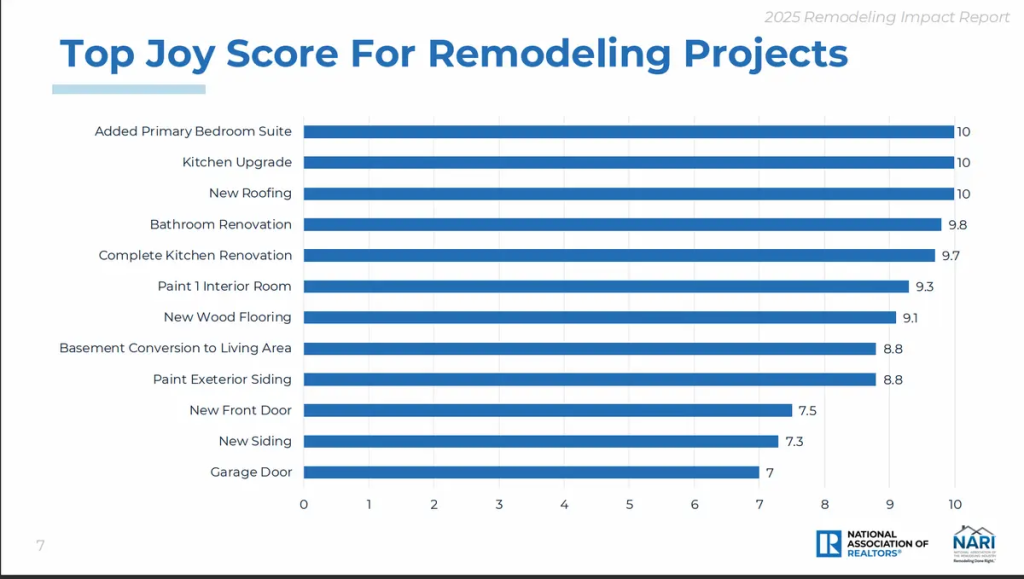
Because owners often plan to stay in the home and enjoy the improvements for a few years before selling, the report also assigns a “joy score” to each project. The score is derived from a survey of homeowners conducted by NAR’s consumer website HouseLogic.
“Homeowners undertake remodeling projects for numerous reasons, but what remains intriguing is the disparity between the joy experienced post-remodel and the actual cost recovery,” says Jessica Lautz, NAR’s deputy chief economist.
Americans spent an estimated $603 billion last year on remodeling their homes, according to the report.
- To upgrade the home’s worn-out surface finishes and materials (27%)
- To improve energy efficiency (19%)
- A desire for a change (18%)
- Because they plan to sell their home within the next two years (18%)
How Real Estate Pros Are Helping
Forty-three percent of homeowners say home remodeling, repairs and maintenance stresses them out.
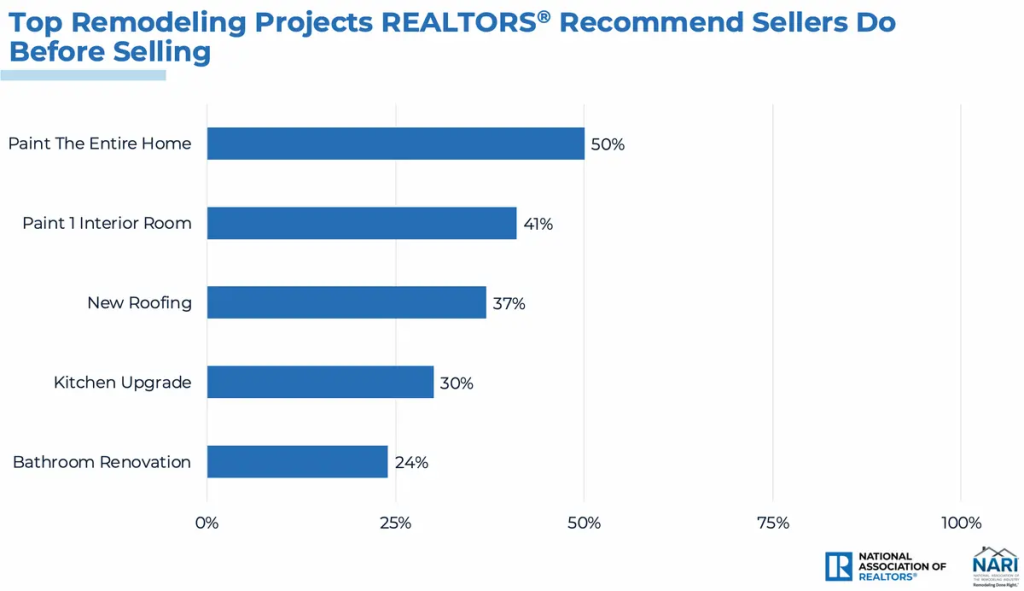
Real estate pros are finding themselves an important ally in helping to guide remodeling decisions.
- Painting
- Installing a new roof
- Kitchen upgrades
- Bathroom renovation
Nearly half of home buyers are less willing to compromise on the condition of the home they purchase.
Homeowners who don’t intend to sell soon may be motivated by recent home appreciation to undertake house projects.
Article by:
Melissa Dittmann Tracey is a contributing editor for REALTOR® Magazine. As editor of Styled, Staged & Sold, Tracey blogs about the latest home design and staging trends. She also produces a segment called Hot or Not?.



By Melissa Dittmann Tracey
Melissa Dittmann Tracey is a contributing editor for REALTOR® Magazine and editor of the Styled, Staged & Sold blog.
A new NAR report reveals which projects homeowners may want to prioritize if they plan to sell within the next year or two.
The home remodeling boom continues, as homeowners leverage their equity to take on a range of house projects, large and small. But are they choosing the best projects to help boost their home’s resale value?
A fancy kitchen upgrade or bathroom renovation may have a significant impact on potential buyers. But for projects that recoup most or all of their cost, owners should think smaller, according to the newly released 2025 Remodeling Impact Report, conducted by the National Association of REALTORS® and the National Association of the Remodeling Industry. Swapping out the front door for steel, for example, is likely to get the most bang for the buck.
Prioritizing Home Remodeling Projects
Being able to help sellers prioritize home improvements and maximize their net on the sale is a key value real estate agents offer. For a range of home improvement projects, the Remodeling Impact Report compares estimated cost (estimates are from a NARI member survey) with real estate professionals’ estimates of the likely dollar value at resale.
The report revealed the following home remodeling projects may offer the highest returns, based on their estimated cost recovery at resale:
- New steel front door: 100% (estimated return based on upfront cost)
- Closet renovation: 83%
- New fiberglass front door: 80%
- New vinyl windows: 74%
- New wood windows: 71%
- Basement conversion to living area: 71%
- Attic conversion to living area: 67%
- Complete kitchen renovation: 60%
- Minor kitchen upgrade: 60%
- Bathroom addition: 56%
- New primary suite: 54%
- Bathroom renovation: 50%
A Balancing Act
Because owners often plan to stay in the home and enjoy the improvements for a few years before selling, the report also assigns a “joy score” to each project. The score is derived from a survey of homeowners conducted by NAR’s consumer website HouseLogic.
“Homeowners undertake remodeling projects for numerous reasons, but what remains intriguing is the disparity between the joy experienced post-remodel and the actual cost recovery,” says Jessica Lautz, NAR’s deputy chief economist.
Americans spent an estimated $603 billion last year on remodeling their homes, according to the report.
- To upgrade the home’s worn-out surface finishes and materials (27%)
- To improve energy efficiency (19%)
- A desire for a change (18%)
- Because they plan to sell their home within the next two years (18%)
How Real Estate Pros Are Helping
Forty-three percent of homeowners say home remodeling, repairs and maintenance stresses them out.
Real estate pros are finding themselves an important ally in helping to guide remodeling decisions.
- Painting
- Installing a new roof
- Kitchen upgrades
- Bathroom renovation
Nearly half of home buyers are less willing to compromise on the condition of the home they purchase.
Homeowners who don’t intend to sell soon may be motivated by recent home appreciation to undertake house projects.
Article by:
Melissa Dittmann Tracey is a contributing editor for REALTOR® Magazine. As editor of Styled, Staged & Sold, Tracey blogs about the latest home design and staging trends. She also produces a segment called Hot or Not?.
By Melissa Dittmann Tracey
Melissa Dittmann Tracey is a contributing editor for REALTOR® Magazine and editor of the Styled, Staged & Sold blog.
A new NAR report reveals which projects homeowners may want to prioritize if they plan to sell within the next year or two.
The home remodeling boom continues, as homeowners leverage their equity to take on a range of house projects, large and small. But are they choosing the best projects to help boost their home’s resale value?
A fancy kitchen upgrade or bathroom renovation may have a significant impact on potential buyers. But for projects that recoup most or all of their cost, owners should think smaller, according to the newly released 2025 Remodeling Impact Report, conducted by the National Association of REALTORS® and the National Association of the Remodeling Industry. Swapping out the front door for steel, for example, is likely to get the most bang for the buck.
Prioritizing Home Remodeling Projects
Being able to help sellers prioritize home improvements and maximize their net on the sale is a key value real estate agents offer. For a range of home improvement projects, the Remodeling Impact Report compares estimated cost (estimates are from a NARI member survey) with real estate professionals’ estimates of the likely dollar value at resale.
The report revealed the following home remodeling projects may offer the highest returns, based on their estimated cost recovery at resale:
- New steel front door: 100% (estimated return based on upfront cost)
- Closet renovation: 83%
- New fiberglass front door: 80%
- New vinyl windows: 74%
- New wood windows: 71%
- Basement conversion to living area: 71%
- Attic conversion to living area: 67%
- Complete kitchen renovation: 60%
- Minor kitchen upgrade: 60%
- Bathroom addition: 56%
- New primary suite: 54%
- Bathroom renovation: 50%
A Balancing Act
Because owners often plan to stay in the home and enjoy the improvements for a few years before selling, the report also assigns a “joy score” to each project. The score is derived from a survey of homeowners conducted by NAR’s consumer website HouseLogic.
“Homeowners undertake remodeling projects for numerous reasons, but what remains intriguing is the disparity between the joy experienced post-remodel and the actual cost recovery,” says Jessica Lautz, NAR’s deputy chief economist.
Americans spent an estimated $603 billion last year on remodeling their homes, according to the report.
- To upgrade the home’s worn-out surface finishes and materials (27%)
- To improve energy efficiency (19%)
- A desire for a change (18%)
- Because they plan to sell their home within the next two years (18%)
How Real Estate Pros Are Helping
Forty-three percent of homeowners say home remodeling, repairs and maintenance stresses them out.
Real estate pros are finding themselves an important ally in helping to guide remodeling decisions.
- Painting
- Installing a new roof
- Kitchen upgrades
- Bathroom renovation
Nearly half of home buyers are less willing to compromise on the condition of the home they purchase.
Homeowners who don’t intend to sell soon may be motivated by recent home appreciation to undertake house projects.
Article by:
Melissa Dittmann Tracey is a contributing editor for REALTOR® Magazine. As editor of Styled, Staged & Sold, Tracey blogs about the latest home design and staging trends. She also produces a segment called Hot or Not?.
Remodel Versus Move

With over 15 years of experience, our company, Lux Builders & Remodeling, has worked with numerous homeowners with the remodeling and construction of their homes. Even during the economic crisis that hit the construction industry, we endured and worked with our clients to elevate their lifestyles.
We estimate that 95% of all our projects are focused on building and remodeling our client’s current homes because many of the homeowners love their neighborhood and living in Southern California.
There are many reasons for entering a lengthy, energy-consuming, and labor-intense home remodeling project. But the most common reason is to improve homeowners’ lifestyles by bringing the home to match the modern way of living.
Often our clients consider the option of purchasing a different house that will address their needs better than the existing, to avoid the hassle of the construction and remodeling project.
- Both houses are located in the desired Manhattan Beach, CA.
- They are located on a quiet street, with the same lot size.
- One property is being updated by an investor and our client’s home is being fully remodeled.
After extensive remodeling, the cost was a little over $350,000.
Please take a look at the “BEFORE” photos:
 |
 |
See the “AFTER” photos:
 |
 |
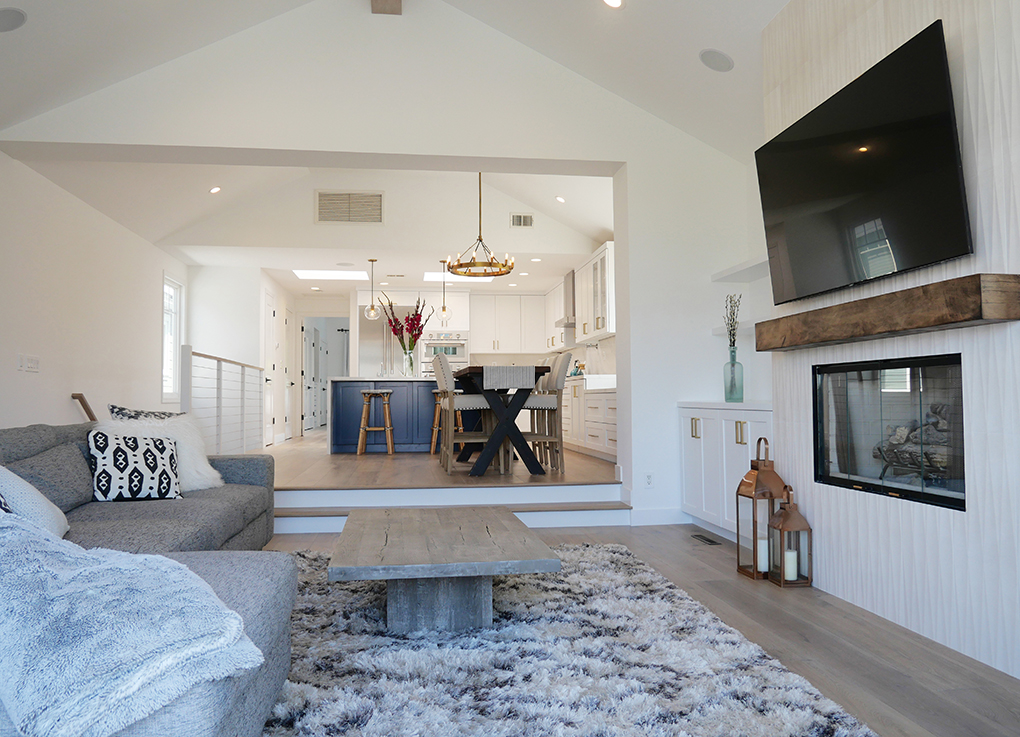
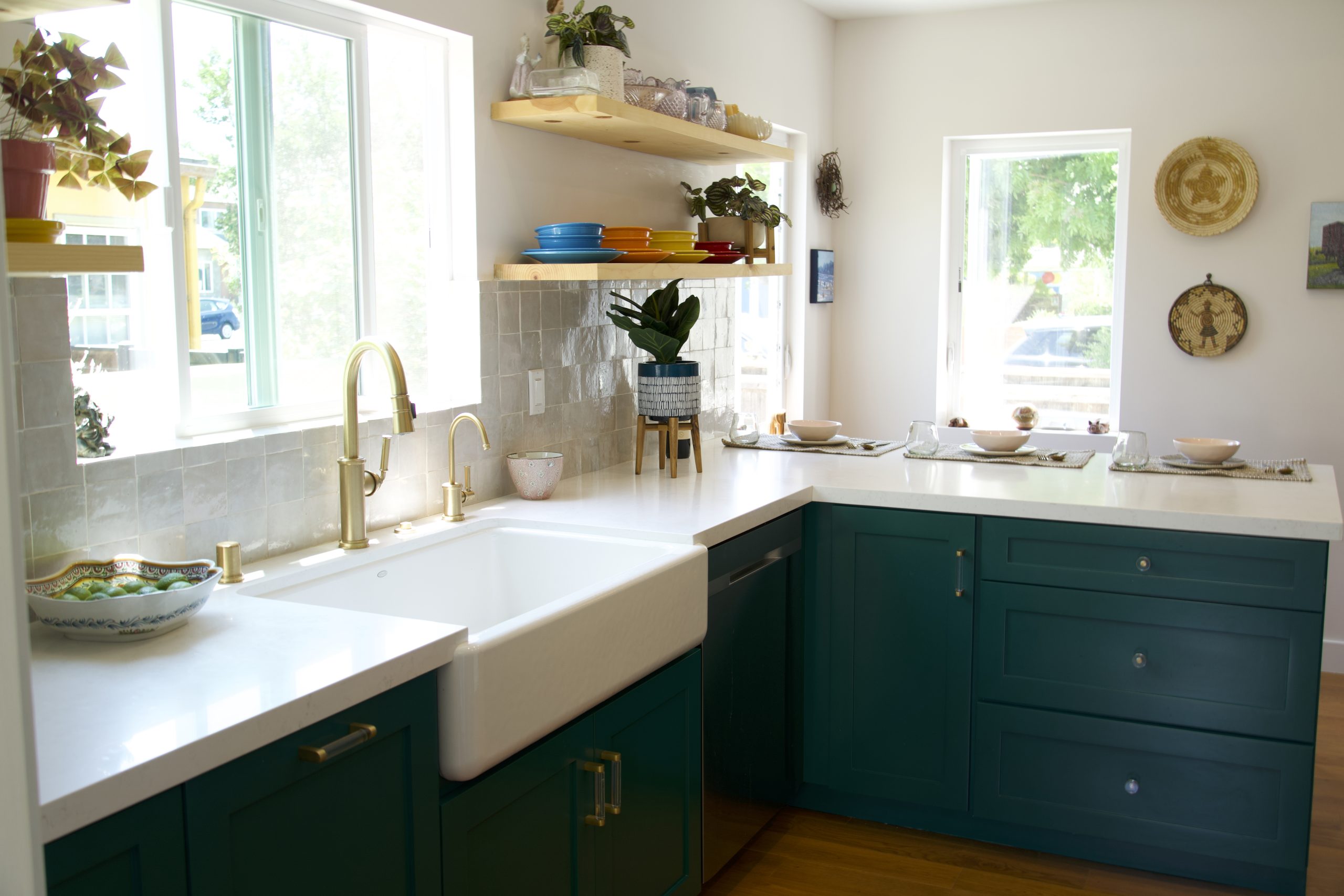
Taste is individual, some of you might like the calming white and gray color scheme of the spec house, but you cannot deny the character and custom finishes picked by our clients.
After calculating costs, the remodeling project was still LESS than the sold price of the spec house.
These two properties display the difference between a “HOME” and a “HOUSE”.