

Welcome to Our Blog
The Passion Behind It All
The reasons why we started California Lifestyle: Construction & Design
Your home is your sanctuary. A place of family, comfort and happiness. California Lifestyle: Construction & Design was brought to fruition in order to educate and advise others on how to enhance their home through construction and remodeling. Giving our readers the tools to uplift their lifestyle.
We are a family owned company, husband and wife. My husband Sagi is passionate about details and quality. I am passionate about choosing the most durable, low maintenance and price conscious products to enhance your design choices.
We have built and remodeled hundreds of homes. Our past projects include bathroom remodeling, kitchen remodeling, room additions and garage conversions. We also design and build new construction homes following all the newest trends available on the market.
We work as a team along with an amazing office staff, architects, a solid construction crew, retail vendors and subcontractors with many years of successful collaboration. Having a strong team allows us to have maximum control over quality and maintain a timely job completion.
Our objective is to guide you through the many stages of updating your home. This blog will help you from the beginning design and budget phase, to the construction phase and ultimately, the completion of the remodeling project.
Here at California Lifestyle: Construction & Design we intend to give away some trade secrets others do not wish to share.
Sincerely,
Sagi and Iris
Lux Builders & Remodeling Inc.
Welcome to Our Blog
Make the Most of Your Indoor-Outdoor Spaces
Blending your home’s interior with your outdoor space can make both feel larger
Making your home feel expansive without compromising the outdoor space is always a challenge. How can you maximize the square footage of your living area without reducing your outdoor space? It’s a problem that we at www.luxbuilders.com often confront in the coastal area of Southern California, where many of the lots are small.
This premium location requires a compromise. In order to build a spacious home without losing the indoor-outdoor lifestyle that people come here to enjoy, we recommend an approach that combines flexibility and creativity.
Going with a contractor based in your area will better understand the issues you may be facing, and their proximity helps them work more efficiently. We advise getting recommendations from friends, looking through local home magazines or searching on www.Houzz.com for builders in your area who do work that you can relate to.
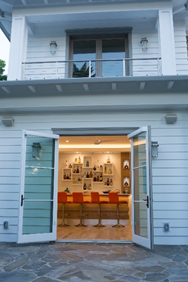
Look outside for inspiration. One of the secrets to making your home seem larger is to blur the lines between spaces. This may include stretching upward into the attic space, finding unexpected places for storage or adding custom doors. We can create an integral indoor-outdoor entertaining area by installing bifold, pocket or multiple sliding doors. Here at Lux Builders & Remodeling we often include those kinds of doors to blur the boundaries.
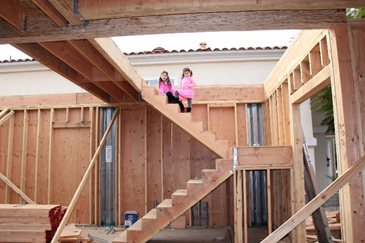
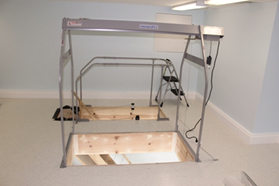
If giving up your attic means losing storage, adding a loft or second story above your garage can replace that storage space. That was the case for this homeowner in Torrance, CA. Our client also wanted an easy access to the difficult-to-reach space. In order to do this, we built and installed a lift system above the garage. The system includes both ladder access and a hoist for lifting larger items. We’ve been installing them whenever possible ever since.
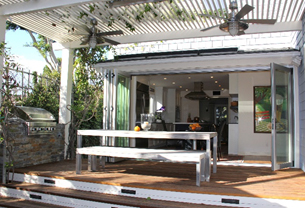
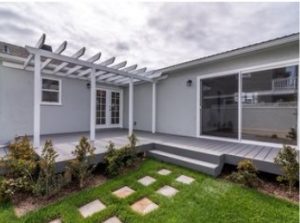
Lastly, replacing an exterior wall with one that opens completely makes the transition between your indoor and outdoor space seamless. Finding a way to maximize both the square footage of the living space and the outdoor space in this Manhattan Beach, CA home, which was on a small lot, was crucial for our clients. We created a welcoming indoor-outdoor vibe by installing bifold doors. That change opened the entire exterior wall at the end of the kitchen to the trellis-covered deck and yard beyond, visually expanding the entire space.
We hope that these tips can be helpful in your next home remodeling project. Each space is different so don’t be afraid to tackle new ideas to better your house.
Welcome to Our Blog
How to Get the Luxury Look for Less
Ways to achieve high-end results on a lower budget
Getting a high-end look for less doesn’t mean sacrificing durability and practicality. There are so many alternatives now that will save you money without compromising style and quality. Work with a contractor who has a thirst for learning and who isn’t afraid of being innovating. That way, you’ll find the latest and greatest of what’s available.
While custom cabinets allow for limitless possibilities, you can achieve your desired design for a lower cost by opting for semi-custom cabinetry. If your contractor has experience with semi-custom cabinets, they’ll know how to manipulate your layout and give you something amazing. The same concept applies to vanities, closets and other storage systems.
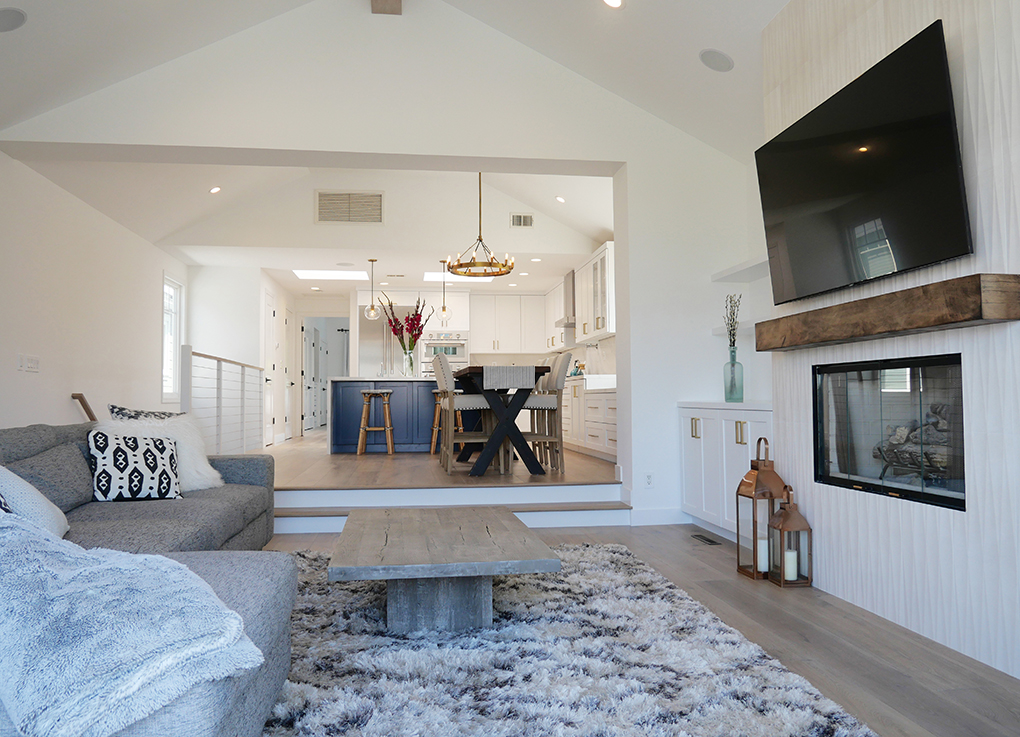
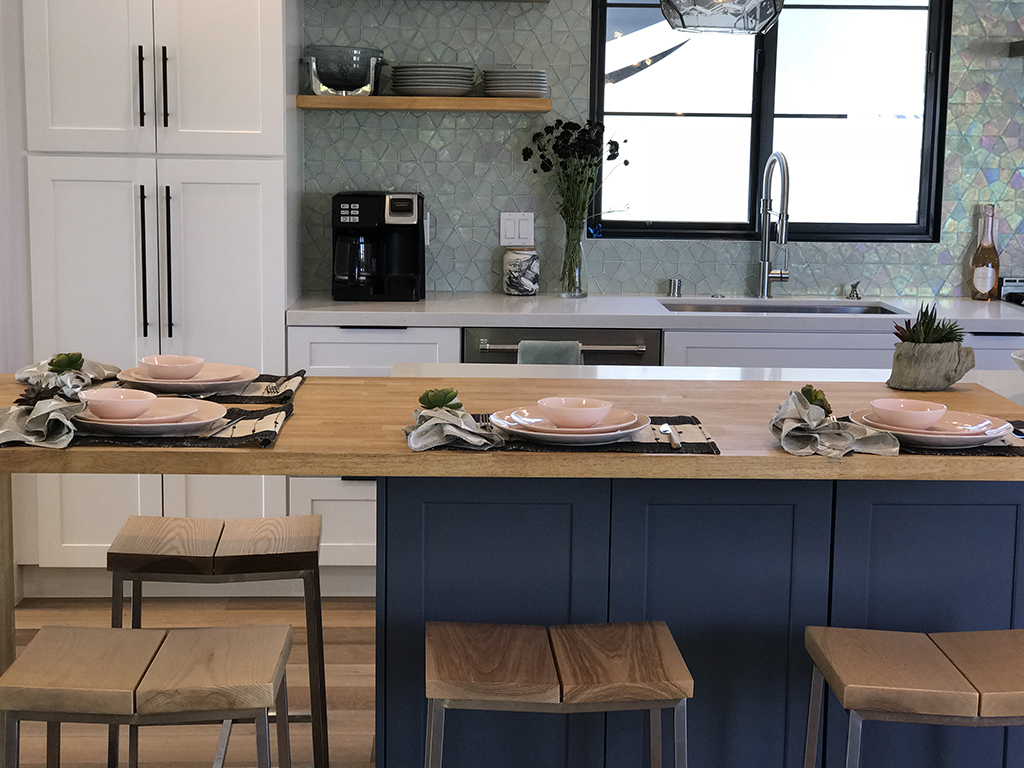
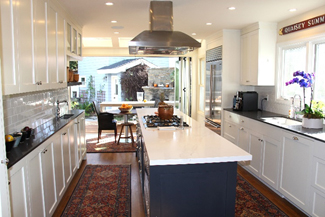
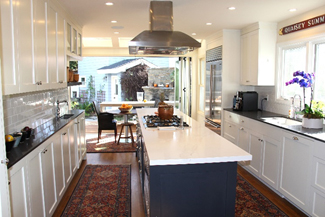
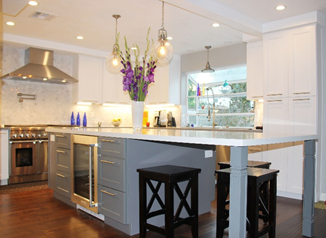
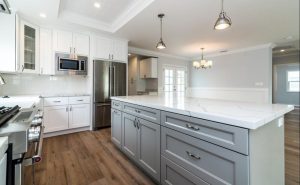
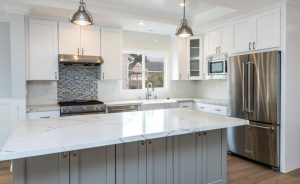
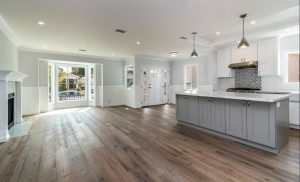
For clients in Irvine, CA we used prefabricated Shaker-style cabinets in two colors, seen here, to give the kitchen a more custom look and feel. Our team also opened up the kitchen to the living room, allowing for a bright and elegant flow to the new space.
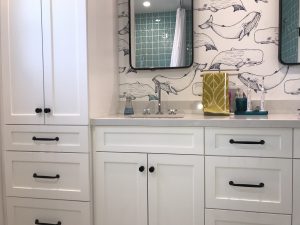
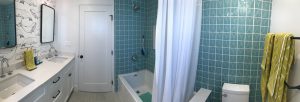
Instead of marble, use porcelain in your bathroom to achieve the same impressive look but for much less money. Consider purchasing 24-by-48-inch porcelain tiles, it won’t compromise the look and will achieve the goal of continuous lines while saving you time and money.
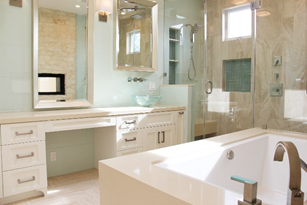
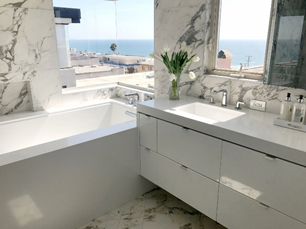
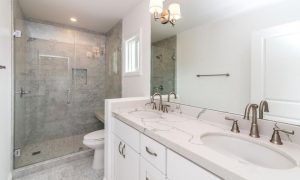
Homeowners in Manhattan Beach, CA originally wanted marble in their master bath, seen here. To get the same look at a lower cost, we used porcelain slab. It doesn’t require sealing or a special fabricator, it’s practical and it’s just as beautiful as marble — but at a quarter of the price.
For a classic look at a fraction of the cost, we also use faux wood beams in our projects. Engineered-wood beams are lighter, don’t require structural changes or reinforcement, and look like real wood.
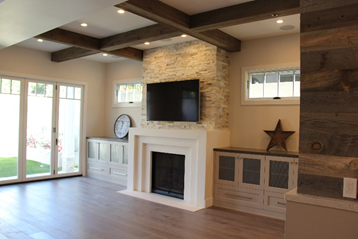
One of our Manhattan Beach, CA clients wanted a coastal style with the warmth of a transitional home. We ordered custom-made engineered wood beams, seen here; the clients were even able to select the color. Engineered-wood flooring and reclaimed wood accents also were used throughout the home.
As you can see, you don’t need sacrifice design ideas due to high-costs. Work with your contractor or designer and find solutions. These are just a few of the ways we helped our clients to reduce their costs, while at the same time, adding luxury into their homes.
Welcome to Our Blog
Remodel versus Move
With over 15 years of experience, our company, Lux Builders & Remodeling, has worked with numerous homeowners with the remodeling and construction of their homes. Even during the economic crisis that hit the construction industry, we endured and worked with our clients to elevate their lifestyles.
We estimate that 95% of all our projects are focused on building and remodeling our client’s current homes because many of the homeowners love their neighborhood and living in Southern California.
There are many reasons for entering a lengthy, energy-consuming, and labor-intense home remodeling project. But the most common reason is to improve homeowners’ lifestyles by bringing the home to match the modern way of living. When you remodel your home, you will be able to create a space where family members can entertain, relax, work, cook, study, feel excited, and grateful to inhabit.
Often our clients consider the option of purchasing a different house that will address their needs better than the existing, to avoid the hassle of the construction and remodeling project. Often times they move into a remodeled or larger home.
We get it; construction can be stressful especially when it is performed by someone inexperienced, lacking knowledge, disorganized and not detailed oriented.
One recent project is an amazing example of how you can transform your current home into your dream home by remodeling. Coincidentally, a few houses down from our client’s home, an investor purchased a house and did an extensive remodeling project in order to sell. Our construction coincided with the investors.
These two houses give a rare “apple to apple” comparison, which I welcome you to take a look at. But first, let’s review what each home has to offer:
- Both houses are located in the desired Manhattan Beach, CA. Nearby is the Manhattan Beach Middle School and close to downtown Manhattan Beach, which has the best Los Angeles restaurants and shops.
- They are located on a quiet street, with the same lot size 5300 sq. ft., same home size 1,480-1,500 sq. ft. and relatively the same sale price.
- One property is being updated by an investor and upon completion will be listed for sale. And our client’s home, which is going to be completely remodeled to meet their needs and desires – a dream home in making!
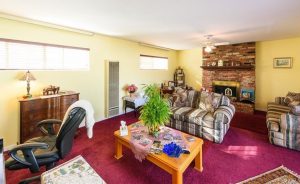
Please take a look at the “BEFORE” photos of the house our clients purchased:
After extensive and complete remodeling, the cost was a little over $350,000. This included a complete change of layout with a room addition, new windows and doors, new electrical, custom cabinetry throughout the house, remodeling all the bathrooms, new flooring, new deck, patio and a state of art outdoor space/sanctuary.
See the “AFTER” photos:
Please take a look at the investor’s photos after upon the sale of the remodeled property:
Taste is individual, some of you might like the calming white and gray color scheme of the spec house, but you cannot deny the character and all the custom finishes picked with love by our clients. Our clients also selected more luxurious items such as custom cabinetry, a custom layout and design to reflect their specific taste and goals. The spec model house has a basic, simple color scheme, semi-custom cabinetry, minimal electrical work, budgeted finish fixtures, budgeted tiles and countertops, etc.
After calculating the costs of the custom, high-end remodeling project to the spec house, the final cost was still LESS than the sold price of the spec house!
These two properties display the distinctive difference between a “HOME” and a “HOUSE”.
This was indeed a rare opportunity to compare the outcome of almost identical properties to begin with that were undergoing extensive remodeling at the same time, as well as compare the cost.
Project completed by Lux Builders & Remodeling Inc.
@luxbuilders
Welcome to Our Blog
ADUs – Accessory Dwelling Unit / Mother-In-Law Suite
There are many reasons why homeowners consider building an accessory dwelling unit, also known as an ADU or mother-in-law quarter. With the high rising cost of housing in urban areas, finding affordable housing has become difficult. Building an ADU is an excellent long-term investment that will increase your property value and provide a desirable space. It can be rented out for extra income or used for multi-generation families. The latter has become a relief to families looking to keep aging parents nearby or helping boomerang children get on their feet. During the pandemic, ADUs became a fantastic option for a home office. California is now trying to make it easier to add an ADU to your property. If you are looking to add one, please gives us a call and check out our creative space-saving ADU ideas.
Los Angeles Bohemian Dream
ADU kitchen
ADU Full Bathroom
Location: Los Angeles, CA
Size: 700 sqf
Designer & Builder: Lux Builders & Remodeling, Inc
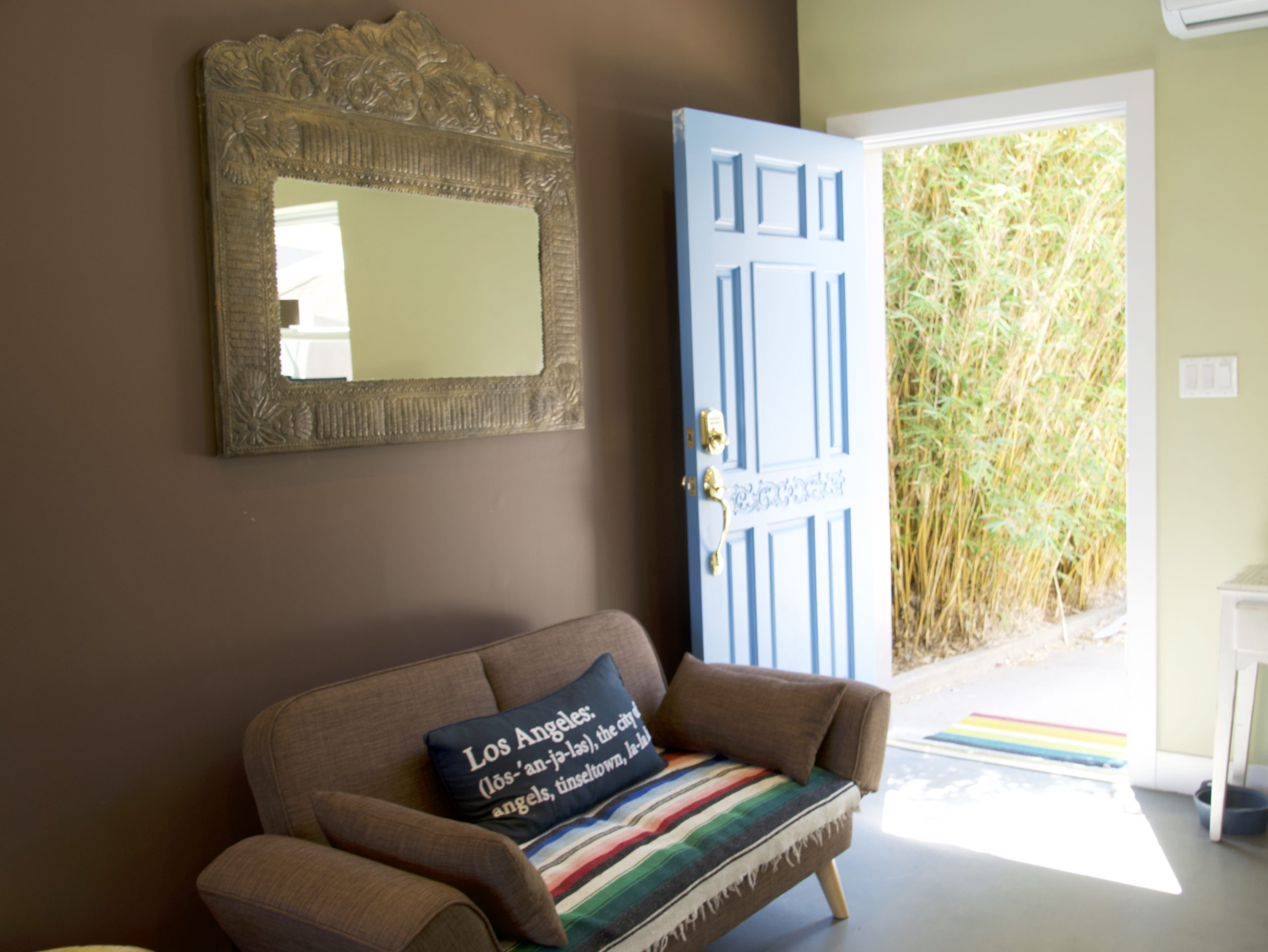
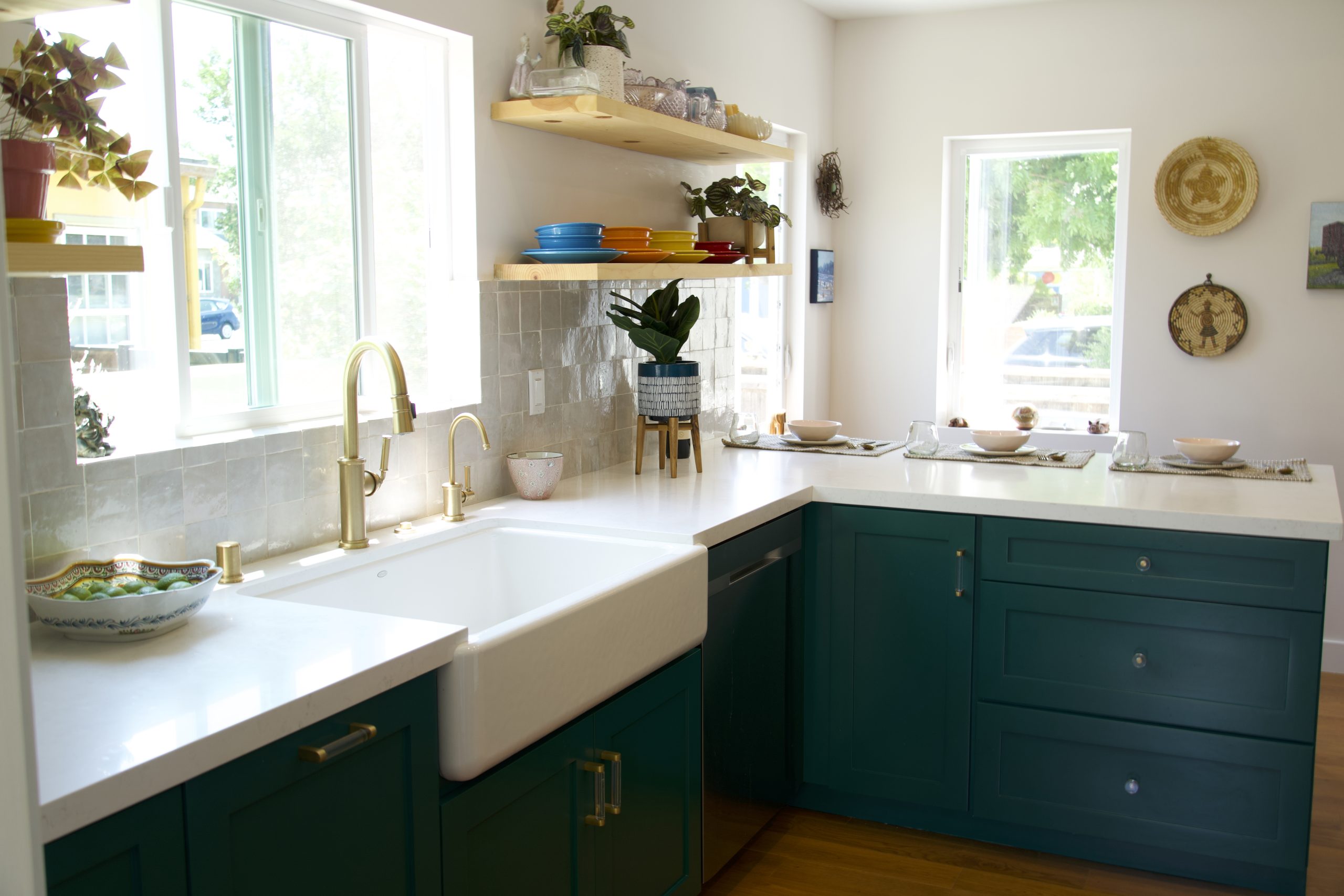
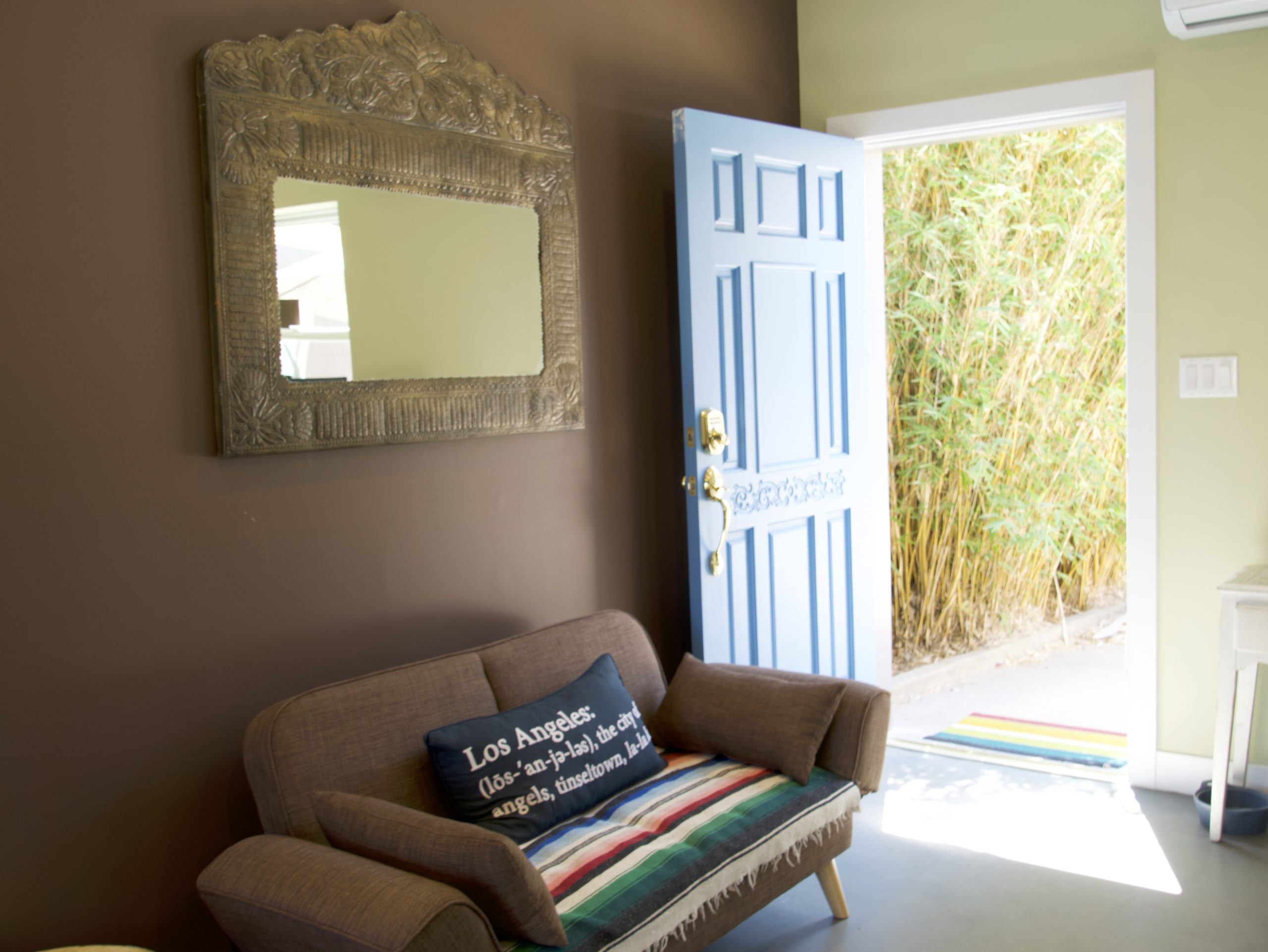
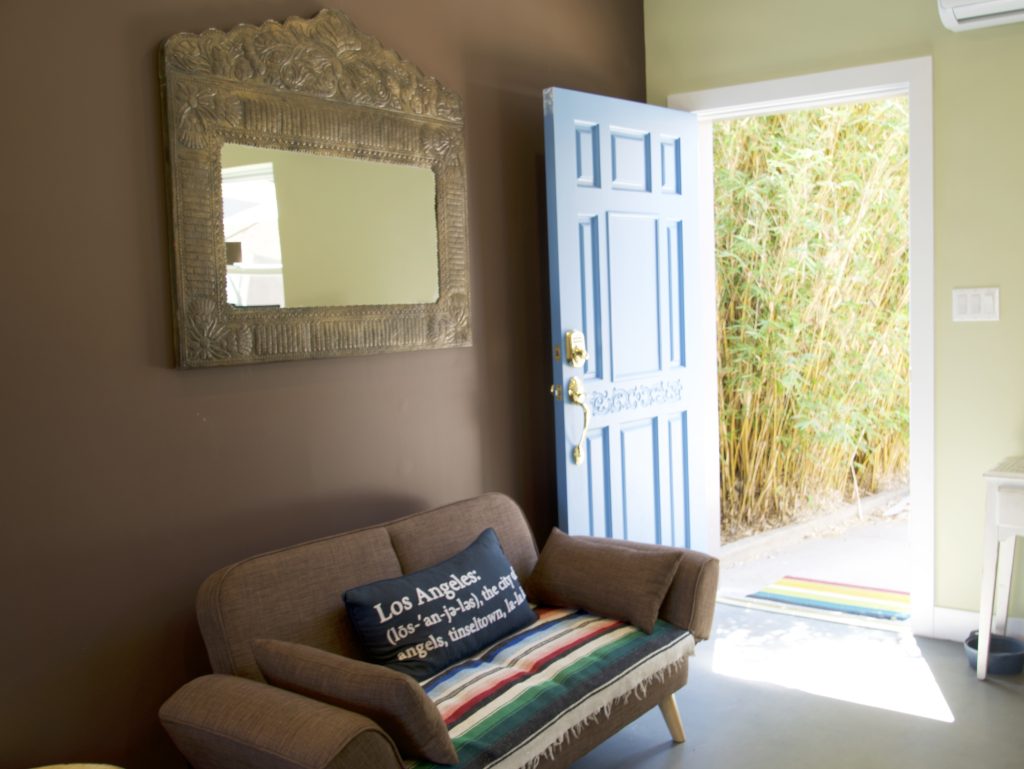
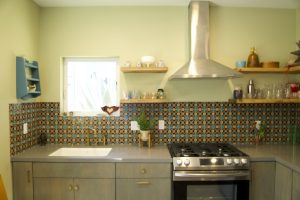
With a new college graduate on the way, this family decided to give their graduate some space to call her own. The garage was converted into a small, vibrant space that feels warm and inviting. The bright, eclectic colors chosen pays homage to the California lifestyle. This ADU is equipped with a full kitchen that opens up to a dining/living combo area. Just outside, the kitchen sits a patio to entertain guests.
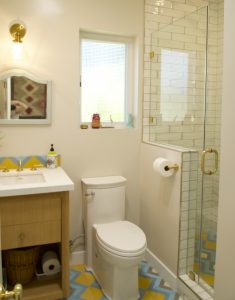
The tiles chosen for the bathroom make the room seem bigger and brighter. Subway tiles accented with the floor tiles give this room a sense of joy.
We would like to share with you valuable information about ADUs. If you consider building one, please do not hesitate to reach out to Lux Builders & Remodeling Inc.
310-796-1700 / 888-335-0777
hello@luxbuilders.com
California Accessory Dwelling Unit (ADU) Law as of January 1, 2020
Reduced Costs and Burdens for Developing ADUs
- ADU applications must be approved within 60 days without a hearing or discretionary review if the requirements are met.
- For ADUs permitted by 2025, cities/counties cannot require the owner to live at the property.
- No impact fees are required for ADUs under 750 sqft; proportional fees apply to larger ADUs.
- An ADU can be developed at the same time as a primary dwelling, under most of the same rules.
- A city/county must delay code enforcement on an unpermitted ADU to allow it to be legalized.
- Single-family HOAs must allow the development of ADUs, subject to reasonable standards.
- Single-family homeowners can also develop JADUs—units under 500 sqft within a residence.
- ADUs are subject to Automatic Approval — No Local Limits when all code and State requirements are met.
Automatic Approval — No Local Limits
- An ADU or JADU converted from existing space in the home or another structure.
- A new detached ADU under 800 sq ft in size, 16 feet in height, with 4-foot setbacks.
- Combination of one internal JADU and one detached ADU.
Ministerial Approval — Minimal Local Limits
- No minimum lot size requirement.
- No maximum unit size limit less than 1,000 sq ft for a two-bedroom ADU.
- No required replacement parking when converting a garage.
- No required parking near transit or conversions.
- No height limit under 16 feet or setbacks over 4 feet.
- No setbacks for existing structure conversions.
- Design standards must be objective.
- FAR restrictions must allow 800 sq ft ADUs.
Lux Builders & Remodeling Inc.
310-796-1700 / 888-335-0777
hello@luxbuilders.com
www.luxbuilders.com
www.houzz.com/pro/luxbuilders
Welcome to Our Blog
CHANGES TO STATEWIDE ADU LAW DUE TO SB-897 AND AB-2221
The California legislature passed, and the Governor signed two bills, SB-897 and AB-2221, that both relate to local permitting of accessory dwelling units (ADUs). These two bills make substantial revisions to state law and are likely to require local jurisdictions to review and readopt any local ordinances related to ADUs.
The laws go into effect on January 1, 2023, and will collectively impose the following changes to state-wide ADU law:
- That ADU ordinances only impose objective standards on accessory dwelling units that can include but are not limited to, parking, height, setback, landscape, architectural review, the maximum size of a unit, and standards that prevent adverse impacts on any real property that is listed in the California Register of Historical Resources. Such standards must be “standards that involve no personal or subjective judgment by a public official and are uniformly verifiable by reference to an external and uniform benchmark or criterion available and knowable by both the development applicant or proponent and the public official prior to submittal.”
- That an accessory dwelling unit that is detached from the proposed or existing primary dwelling unit may be constructed in a detached garage.
- That construction of an accessory dwelling unit shall not constitute a Group R occupancy change under the local building code, absent express written findings by the building official that the construction of the unit could have a specific, adverse impact on public health and safety. However, a public agency can still find a change in occupancy for purposes of applying building code requirements if the space was previously un-habitable or was only permitted for non-residential use and was converted.
- The construction of an ADU will not trigger requirements to add fire sprinklers in any existing primary dwelling.
- Any denial of a junior ADU or ADU application requires the provision of a full set of comments to the applicant with a list of items that are defective or deficient and a description of how the application can be remedied by the applicant within the 60-day time frame to act on a permit application.
- A local jurisdiction must require a demolition permit to replace a detached garage with an ADU but must issue the permit concurrently with the building permit for the ADU. An applicant cannot be required to provide written notice or post a placard for such demolitions unless they are in a historic district.
- Revised minimum height limits that must allow the following heights for ADUs: 18 feet for a detached ADU on a lot within one-half mile walking distance of a major transit stop or high-quality transit corridor, with an allowance of an additional two feet to accommodate a roof pitch aligned with the primary dwelling unit.
- 18 feet for a detached ADU on a lot with an existing or proposed multi-family, multi-story dwelling. 25 feet or the height limit under the local zoning ordinance, for an ADU, attached to a primary dwelling, although a local agency can ensure the ADU does not exceed two stories.
- Front setback requirements cannot be used to prohibit the construction of an ADU, where there is no other alternative to allow for the construction of an 800-square-foot ADU that meets height limits and complies with four-foot side and rear setbacks.
- Local agencies are prohibited from imposing any parking standards on an accessory dwelling unit that is included in an application to create a new single-family dwelling unit or a new multifamily dwelling on the same lot, provided that the ADU meets other specified requirements. Local agencies cannot require the modification of existing multi-family dwellings with side or rear setbacks of less than four feet as a condition of approving ADUs.
- Local agencies are expressly prohibited from denying an application to create an accessory dwelling unit due to the correction of nonconforming zoning conditions, building code violations, or unpermitted structures that do not present a threat to public health and safety and are not affected by the construction of the accessory dwelling unit. This includes corrections to the primary dwelling unit unless the correction is necessary to protect health and safety.
- Local agencies are prohibited from denying building permits for an unpermitted ADU constructed before January 1, 2018, due to violations of building standards or non-compliance with ADU laws unless the agency finds that correction of a violation is specifically necessary to protect the health and safety of the occupants or public. However, this protection does not apply to buildings deemed substandard under the State Housing Law.
Welcome to Our Blog
12 Remodeling Projects That Offer the Best Value at Resale (Content by Melissa Dittmann Tracey)
By Melissa Dittmann Tracey
Melissa Dittmann Tracey is a contributing editor for REALTOR® Magazine and editor of the Styled, Staged & Sold blog.
A new NAR report reveals which projects homeowners may want to prioritize if they plan to sell within the next year or two.
The home remodeling boom continues, as homeowners leverage their equity to take on a range of house projects, large and small. But are they choosing the best projects to help boost their home’s resale value?
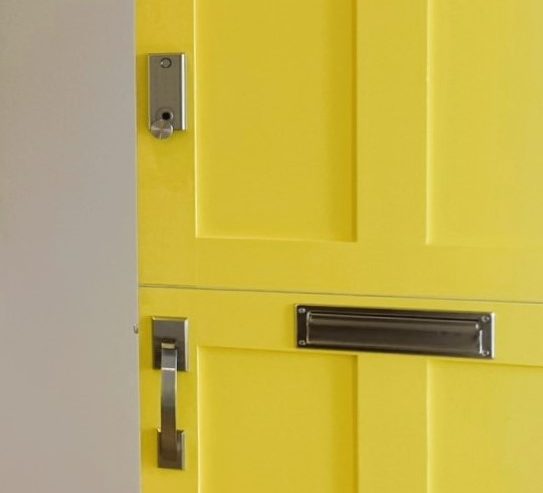
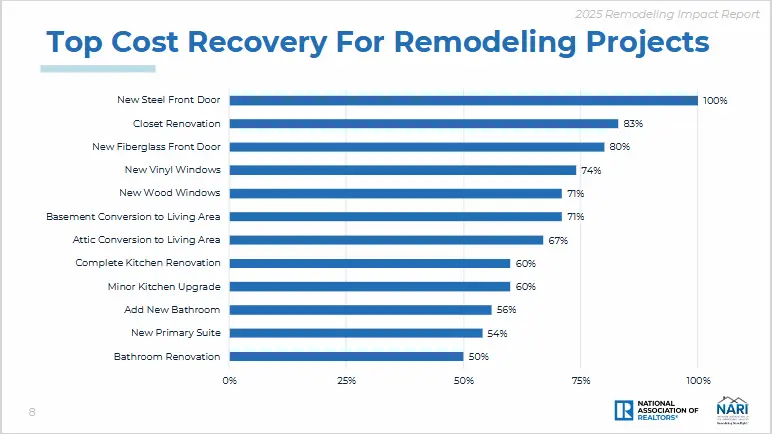
A fancy kitchen upgrade or bathroom renovation may have a significant impact on potential buyers. But for projects that recoup most or all of their cost, owners should think smaller, according to the newly released 2025 Remodeling Impact Report, conducted by the National Association of REALTORS® and the National Association of the Remodeling Industry. Swapping out the front door for steel, for example, is likely to get the most bang for the buck.
Prioritizing Home Remodeling Projects
Being able to help sellers prioritize home improvements and maximize their net on the sale is a key value real estate agents offer. For a range of home improvement projects, the Remodeling Impact Report compares estimated cost (estimates are from a NARI member survey) with real estate professionals’ estimates of the likely dollar value at resale.
The report revealed the following home remodeling projects may offer the highest returns, based on their estimated cost recovery at resale:
- New steel front door: 100% (estimated return based on upfront cost)
- Closet renovation: 83%
- New fiberglass front door: 80%
- New vinyl windows: 74%
- New wood windows: 71%
- Basement conversion to living area: 71%
- Attic conversion to living area: 67%
- Complete kitchen renovation: 60%
- Minor kitchen upgrade: 60%
- Bathroom addition: 56%
- New primary suite: 54%
- Bathroom renovation: 50%
A Balancing Act
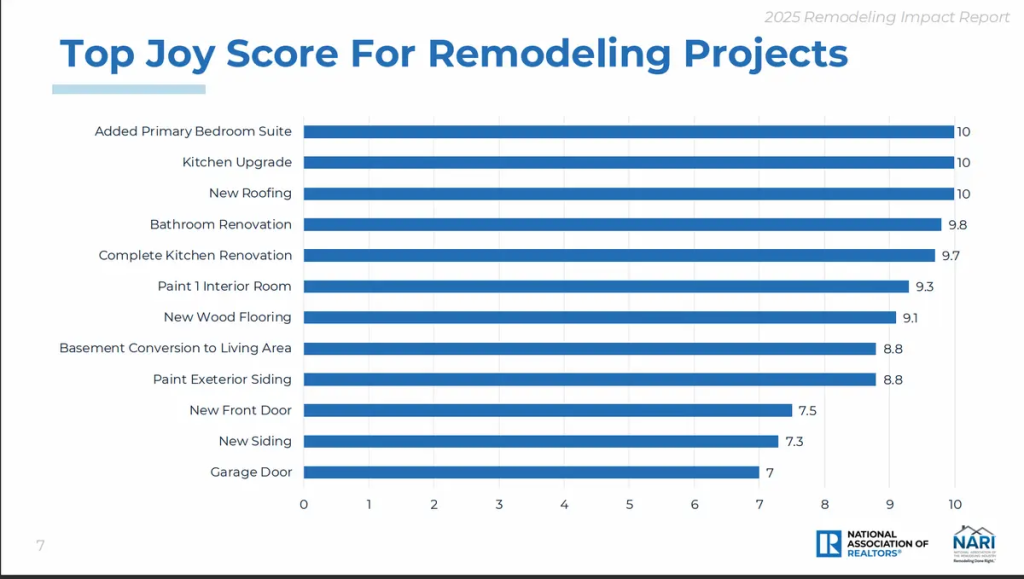
Because owners often plan to stay in the home and enjoy the improvements for a few years before selling, the report also assigns a “joy score” to each project. The score is derived from a survey of homeowners conducted by NAR’s consumer website HouseLogic.
“Homeowners undertake remodeling projects for numerous reasons, but what remains intriguing is the disparity between the joy experienced post-remodel and the actual cost recovery,” says Jessica Lautz, NAR’s deputy chief economist.
Americans spent an estimated $603 billion last year on remodeling their homes, according to the report.
- To upgrade the home’s worn-out surface finishes and materials (27%)
- To improve energy efficiency (19%)
- A desire for a change (18%)
- Because they plan to sell their home within the next two years (18%)
How Real Estate Pros Are Helping
Forty-three percent of homeowners say home remodeling, repairs and maintenance stresses them out.
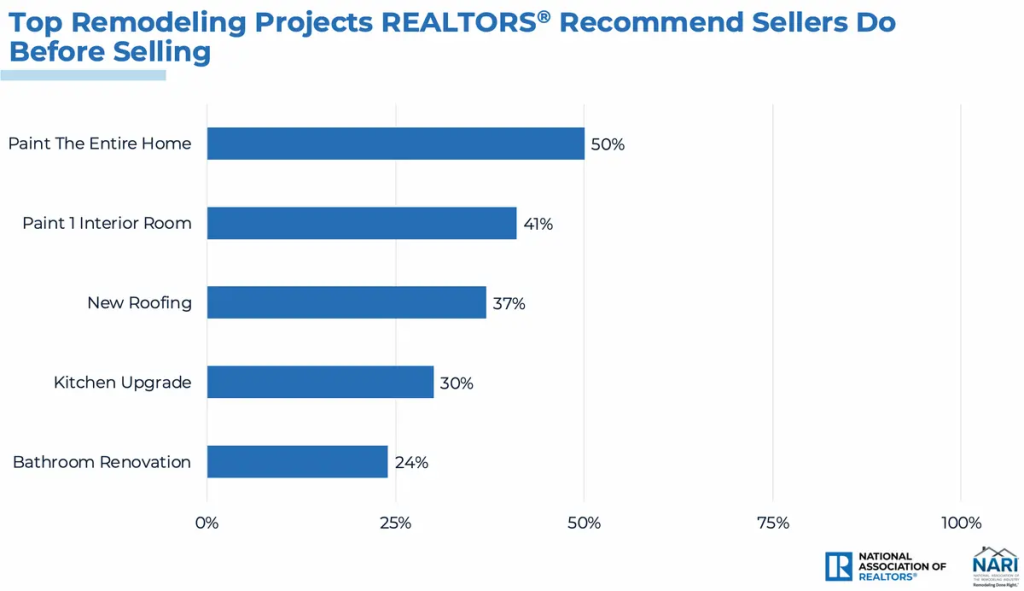
Real estate pros are finding themselves an important ally in helping to guide remodeling decisions.
- Painting
- Installing a new roof
- Kitchen upgrades
- Bathroom renovation
Nearly half of home buyers are less willing to compromise on the condition of the home they purchase.
Homeowners who don’t intend to sell soon may be motivated by recent home appreciation to undertake house projects.
Article by:
Melissa Dittmann Tracey is a contributing editor for REALTOR® Magazine. As editor of Styled, Staged & Sold, Tracey blogs about the latest home design and staging trends. She also produces a segment called Hot or Not?.